
Digital Afterlives of Elis Juliana’s Multimodal Archivism
Abstract
Elis Juliana, one of Curaçao's most celebrated cultural icons, created a distinct multimodal approach to archiving called julianismo. In this article, I reflect on the (digital) afterlives of Juliana and his archival work particularly with the Zikinzá collection, a digital preservation of Juliana and Pater Brenneker's recordings of Afro-Curaçaoan cultural heritage. I look at the scholarly and artistic legacy of the Zikinzá collection and focus in particular on the local and Black Atlantic tradition of Bulabanda and the flying Africans. Along with documenting invaluable sources, Juliana's methodology of julianismo has also pioneered specific ways of knowing and doing research in the Dutch Caribbean. Juliana's multimodal approach to archiving prioritized trusting relationships, respect for many modalities of knowledge, and reciprocal knowledge sharing through artistic-research collaborations. Finally I analyze how territorial archiving themes appear in his youth novella Aventura di un kriki.
Introduction
Curaçaoan scholar Joceline Clemencia once reflected that in working with material so historically and spiritually charged as the work of Papiamentu writer Elis Juliana, one cannot but be affected deeply, forced to confront oneself and take some kind of responsibility.[1] Working intensively with the physical and digital archives of Elis Juliana and other Papiamentu writers in the context of my research on Dutch Caribbean ecological literature inspired a personal search for my place in this world, and a collective responsibility to honor the knowledge of the territory and communities I was studying.[2]
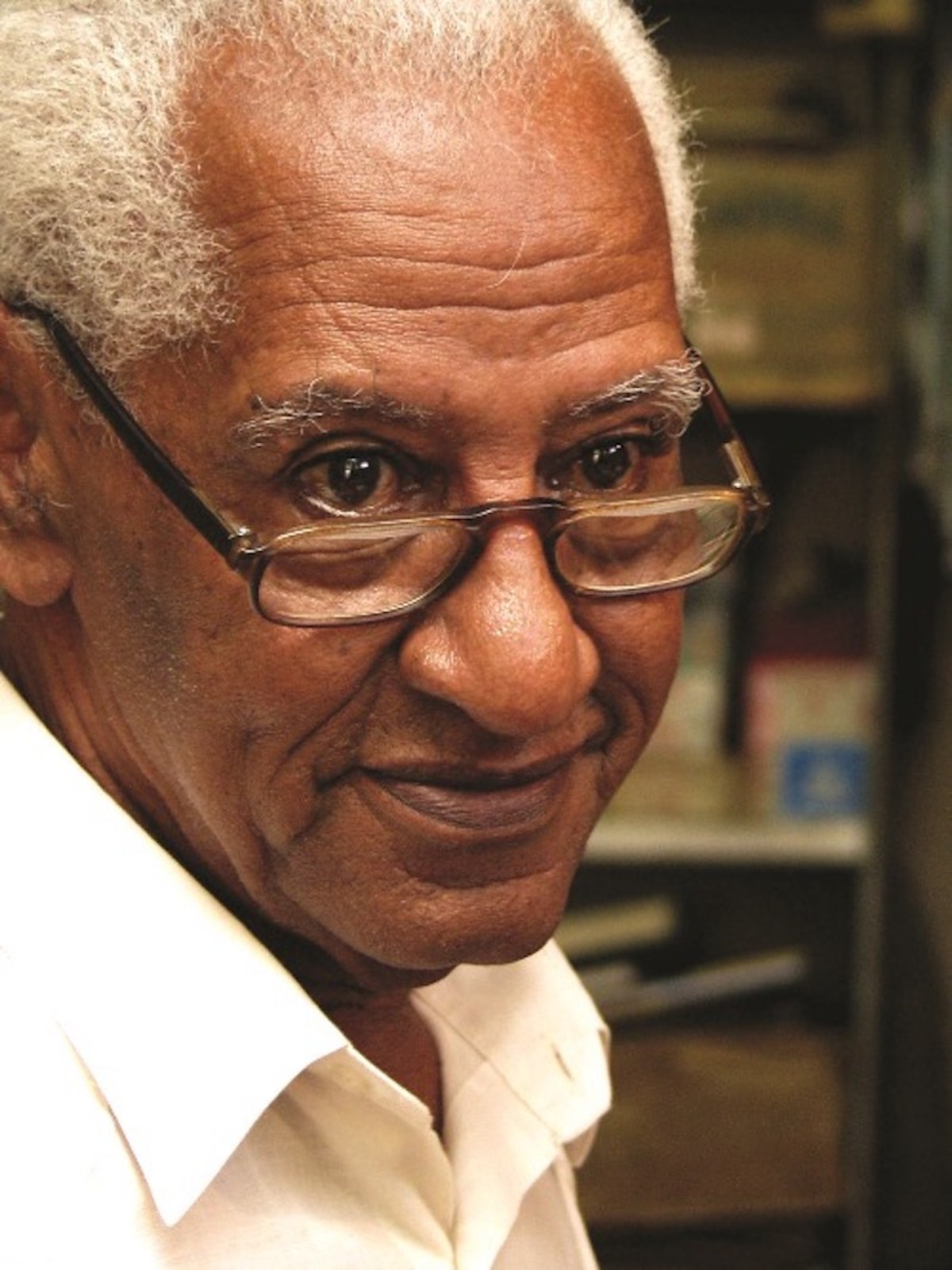
While doing my research, I became increasingly aware of Elis Juliana's distinct approach to archiving. His archival practice prioritized both a deep connection with Curaçao and Bonaire's older knowledge keepers, and the empowerment of future generations of ABCSSS islanders.[3] His work was collaborative and multimodal, and it set a strong precedent for many Curaçaoan researchers and artists. One of Curaçao's most celebrated cultural icons, Juliana was an archeologist, ethno-musicologist, oral story archivist and storyteller who worked across disciplines to unearth the stories held in Curaçao's soil. Although he passed away in 2013, his legacy lives on because of his and the Dutch priest Pater Brenneker's extensive oral history interviews and archiving. The Zikinzá collection, which is one of Curaçao's oldest and largest audio heritage collections, is now available online through the Dutch Caribbean Digital Platform. Along with recording folk history, Juliana communicated the collective knowledge he archived with his Papiamentu-speaking community through artistic interventions, radio and television programs, and a prolific literary career.
As with many intellectual and artistic figures from the Dutch Caribbean, Elis Juliana is not well known outside the ABCSSS islands. That said, his life's work is as groundbreaking and important as that of many in the Caribbean intellectual tradition, such as Édoaurd Glissant or Kamau Brathwaite. He wrote and performed mostly in Papiamentu, and occasionally in Dutch as well. Although some of his work has been translated into Dutch, and to a much lesser extent into English, there has been very limited critical reception of his work outside the Dutch Caribbean.[4] Perhaps this oversight is due to the complex linguistic landscape of Papiamento/u-speaking islands. Or perhaps it is because, although his influence extends beyond the Dutch Caribbean, he always remained firmly grounded in his local context. Yet, as Margo Groenewoud has explained in her article "Decolonization, Otherness, and the Neglect of the Dutch Caribbean in Caribbean Studies," "it is worthwhile for Caribbean scholars to understand the roots of the marginalization of the Dutch Caribbean, not so much as explanation for neglect…but because these roots are an integral part of a shared Caribbean intellectual history."[5] Even within the Dutch Caribbean, many are in a process of remembering roots, and finding knowledge in the soundbites and now increasingly digitized records of Elis Juliana's archival legacy.
The National Archeological Anthropological Memory Management (NAAM) in Curaçao, where Juliana worked for many years as an ethnographer,[6] houses an excellent digital archive in Papiamentu dedicated to Juliana's life and legacy. Mongui Maduro Library, also in Curaçao, has a growing digital archive of catalogued Antilliana texts where I was able to find many of Juliana's works including Aventura di un kriki [Adventures of a Cricket].[7] Thanks to Juliana's lifelong archival commitment, and the digitizing work of many librarians, scholars, and artists, the local and universal knowledge he collected and communicated remains active and accessible.
Juliana and Pater Brenneker preserved Afro-Curaçaoan cultural heritage recorded in the Zikinzá collection through analog recording devices. They knew this knowledge was meant to outlive their own lifespans and thus entrusted their audio files to the National Archives. Their visionary insight to digitize parts of the Zikinzá collection ensured further preservation of this valuable cultural heritage. Juliana did not archive the audio recordings merely to preserve folk knowledge for posterity’s sake. His archival methodology was designed to empower his own people, and thus also included communicating his findings with his community. Similarly, more recent researchers and artists have used the knowledge archived and made accessible through the Zikinzá collection to return the cultural heritage legacy back to ABCSSS islanders through digital and traditional forms.
In the world of secondary education, where I currently work as a teacher-librarian, there is a trend towards multimodal knowledge forms in teaching and learning approaches. In the digital humanities, there is increasingly an emphasis on multimodal pedagogy and publishing.[8] In the arts, multidisciplinarity and new media forms are growing interests. But multimodality, which is now gaining popularity through digital affordances, is not itself a new concept. Multimodality—that is, to make meaning from multiple semiotic modes, or to use multiple literacies in a single medium—is an ancestral practice that laid the foundations for digital praxis. To exist in several different modes of being simultaneously, to creolize, to speak Creole languages, to communicate across languages, to speak with the body, to code-switch: these survival strategies are found in many Afrodiasporic ways of being and knowing, and thus in Caribbean artistic and archival practices as well.
In this article, I look at the Zikinzá collection, a digital preservation of Elis Juliana and Pater Brenneker's cultural heritage work, and then the collection's scholarly and artistic afterlives focusing in particular on the tradition of Bulabanda. I then explore Juliana's particular multimodal approach to archiving. Finally, I explore how multimodal archiving appears thematically in Juliana's literary work. Each section offers entry points into understanding the impact of the Zikinzá collection and the multimodal archival methodology of julianismo, a concept coined by Clemencia which explains Juliana's particular way of integrating research with artistic creation.[9] Juliana's archiving was collaborative and methodological, infused his written and oral storytelling, and connected the past with future ancestors. He documented stories archived within the territory and of those who lived there, and the stories he told referred back to an embodied and emplaced archive.
Juliana was distinctly aware that he was recording ancestral, traditional knowledge for future generations. Not only did he publicly communicate this knowledge during his lifetime through storytelling and various art forms, but he also archived an extensive collection of oral (hi)stories for future artists and researchers, in what would become the Zikinzá collection. In fact, Elis Juliana and Pater Brenneker were the first archivists to submit their research to the National Archives in 1973. I broadly discuss the afterlives of the Zikinzá collection in the work of Dutch Caribbean scholars and artists Frank Martinus Arion, Rose Mary Allen, René Rosalia, Vernon Chatlein, Albert Schoobaar, Kevin Osepa, and Juny Martina. Finally, I dive into Juliana's literary work to consider his engagement with the land and body as an archive in his novella Aventura di un kriki. I will also explain my own research process of sifting through (digital) archives to engage with his work.
The Zikinzá Collection Archival Afterlives
Juliana was active with archives both as a theme in his creative work, and as a practice. The Zikinzá collection, which is one of Curaçao's oldest and largest collections, holds over 1,400 songs and oral histories from 267 informants. This cultural heritage collection was recorded by Elis Juliana and Pater Paul Brenneker, consolidated by the musician Angel Salsbach, and later digitized by Richenel Ansano. At the moment, 356 audio recordings are currently available online as mp3 files through the Dutch Caribbean Digital Platform, with the rest of the collections' recordings and transcriptions stored at the NAAM. Juliana and Pater Brenneker worked together during the 1950's and 1960's conducting oral history interviews and documenting the songs and stories of the elderly from primarily rural areas of Curaçao and Bonaire. The forty hours of audio recordings are a few seconds to several minutes long each and comprise a range of topics, from slave narratives, traditional life, folklore, to songs. The Zikinzá archive has informed important scholarly and artistic research into Curaçao and Bonaire's history of enslavement and African heritage.
Elis Juliana and Pater Brenneker worked together to create the Zikinzá collection, drawing on their particular strengths and positionalities as an Afro-Curaçaoan multi-talented artist, and a respected, socially minded Dutch priest respectively. In this article, I focus primarily on Elis Juliana given his unique archival methodology, or julianismo, exhibited both within and beyond the Zikinzá collection. However, Pater Brenneker must also be recognized for his lasting contributions to Afro-Curaçaoan cultural heritage. Alongside his archival work with the Zikinzá collection, Brenneker published a series of ten books between 1969 and 1975 about folk traditions in Curaçao and Bonaire called Sambumbu. These books explained in further detail many of the interviews that he and Juliana had recorded in the Zikinzá collection. Unfortunately, over the years these books became scarce and largely inaccessible. However, in 2012 Carib Publishing obtained the rights to these works and republished a four-part book series, as well as an open access and searchable digital compilation of all the texts at sambumbu.com. Because of the digitization of this invaluable cultural heritage collection, future scholars and artists are also better able to make sense of the Zikinzá collection.
Well-known Curaçaoan scholar, Rose Mary Allen, used the songs and oral histories from the Zikinzá collection along with her own fieldwork to reconstruct Afro-Curaçaoan life after the abolition of slavery in her dissertation Di ki manera? A Social History of Afro-Curaçaoans 1863-1917.[10] Given the lack of historiography and archival sources of enslaved people and their descendants in general, and specifically of this post-abolition period, it was essential for Allen to use oral histories to reinstate voices to the voiceless. Allen organizes her socio-cultural analysis of the enslaved and newly freed Afro-Curaçaoans around the formal institutions of slavery, the state, and the church that structured their lives. However, she refuses to position them as historical subjects (or objects) merely acted upon, instead presenting them as active agents with their own voice.
Using the recordings of the Zikinzá collection, along with her own extensive oral story collection, Allen returns the voices to those who have otherwise been silenced in traditional historical archives to unearth their testimonies of resilience, resistance, community networks, and social life. Along with her research on the historical social conditions of Afro-Curaçaoans, Allen offers an Afro-Curaçaoan methodological approach to conducting research. Much like Michel-Rolph Trouillot has argued in the case of the Haitian Revolution, Allen makes clear that "the group with power is inextricably linked with the creators of historical records."[11] In Di ki manera? Allen argues strongly for the value and necessity of using oral sources to supplement limiting archives when researching Curaçao, and has an entire chapter dedicated to a proposed Afro-Curaçaoan methodology of using oral and archival sources. Some of the lessons and suggestions she offers include building relationships of trust over time, working collaboratively across generations, and acknowledging the reciprocal knowledge in both oral histories and folklore. Notably these are all similar ways of conducting research and archivism that Juliana engaged in. Indeed, Allen notes that the ethnographic archival methodology used with the Zikinzá collection "has become a model for this type of research on the island [and] no study concerned with the oral history and tradition of Curaçao can overlook their work."[12] Although firmly in the field of academic scholarship, Allen works with academic and local sources (songs, stories) to do her research. One of the most recognized traditional songs that she refers to is "Di ki manera" [In Which Manner], which is also the title of Allen's book. This song recounts an enslaved person contemplating how to survive the injustice of the world they live in. You can listen to the audio recording of Di ki manera from the Zikinzá collection below.

Another scholar who deeply researched the Zikinzá collection was the renowned author Frank Martinus Arion. While most of the recordings in the Zikinzá collection are in Papiamentu, there are significant references in what is understood to be Guene as well.[13] Guene was a language, or mixture of Afro-Portuguese dialects, that enslaved people in Curaçao and Bonaire originally used to secretly communicate with each other. Although there are no more native speakers of Guene, Arion argued in his doctoral thesis The Kiss of a Slave: Papiamentu's West-African Connections that Papiamentu's origins can be traced to Guene.[14] Arion acknowledged he was able to conduct his extensive and now widely referenced research into Guene and Papiamentu, largely thanks to the recordings in the Zikinzá collection.[15] In his book, he traces the linguistic origins of Papiamentu, and reconstructs a Guene linguistic corpus based on the songs from the Zikinzá collection.
In the song "Baulo ta den tera," Arion reconstructs and translates the Guene lyrics that had been mistakenly understood as Papiamentu or worse as unintelligible.[16] In the Zikinzá audio recording we can hear the interviewee Alberto Martina explaining that this song would be sung on plantations when the shon [slave master] came, at which point everyone would start working. Martina confirms that because the shon didn't understand what "Baulo" meant, the song functioned as a warning for enslaved people without alerting the shon. Papiamentu speakers, likely including the shon at the time, may translate this song as "Baulo is in the land" without understanding what "baulo" means. Crucially, the presumed reference to "tera" [land] could signal that this was a digging song, and thus that the enslaved were hard at work. Yet Arion argues that "den tera" is a false friend in Papiamentu of the Guene phrase "dentrá" meaning "to enter."[17] As for the word "baulo," when Pater Brenneker probes for clarification in the interview, Martina simply confirms that the shon didn't know what it meant. In the background we can hear laughter. This laughter could signal that the interviewer or the other guests present during the interview do not wish to fully explain a concept deemed improper or sexually explicit to the Dutch priest.[18] In Arion's reconstructed Guene he translates "baulo" to "bitch" which means this song was likely referring to the slave master as the mistress of the plantation. Through analysis of the Zikinzá archive along with other sources, important knowledge about Guene and Papiamentu, resistance strategies of the enslaved, as well as gendered conditions of life during slavery can be discerned. Arion emphasized the value of the Zikinzá collection for linguistic studies and also acknowledged it as a rich source for many aspects of Antillean cultural heritage.
The Zikinzá collection has had a strong influence on valuable linguistic and socio-historical research, as well as on local musical knowledge. René Rosalia, a Curaçaoan scholar and politician, wrote his dissertation Tambu; De legale en kerkelijke repressie van Afro-Curaçaose volksuitingen [Tambu; The Legal and Religious Repression of Afro-Curaçaoan Folk Expression] in 1996. It is still one of the foundational written texts on the Afro-Curaçaoan musical and dance tradition of tambú. In his dissertation, Rosalia referenced songs and oral accounts from the Zikinzá collection and, importantly, also conducted his own extensive oral history interviews.
More recently, Curaçaoan musician Vernon Chatlein has created a trilogy of concerts called Voices from Letters, which are based on extensive research he conducted into the Zikinzá archives with support from local knowledge keepers. Chatlein started his archival-artistic research in 2020 focusing on the Afro-Curaçaoan tradition of muzik di zumbi. Following Juliana's own research and archival method of julianismo, Chatlein grounded himself in the island territory, consulted the elders, conscientiously cross-referenced his research, and has been sharing his collected, collective knowledge intergenerationally and across the diaspora through interactive concerts. In his first two Voices from Letters concerts, Zikinzá and Imershón, Chatlein honored the songs from the Zikinzá collection and focused on the tradition of muzik di zumbi. In an aftermovie of Imershón, Chatlein reflects that "these are stories that if they wouldn't have done the work they did, Pater Paul Brenneker and Elis Juliana, they probably would have been lost."[19] Just as Juliana and Brenneker did the work they did to record these stories, Chatlein is doing archival and musical work to remember and share these stories across the Curaçaoan community on the island and in the diaspora. I was fortunate enough to experience and share in these encounters where Chatlein created musical performance pieces using samples from the Zikinzá collection, thus breathing new life into the knowledge archived in the recordings. His third concert, Voices from Letters: Kimina, which premiered in 2024, focused more on tambú and was enriched through collaboration with many musicians and dancers, including choreographer Remses Rafaela.
Bulabanda and the Flying Africans
One such story that features prominently in the Zikinzá collection, and that is currently seeing a resurgence across Dutch Caribbean imaginaries, is of the enslaved Africans flying back to Africa. Different versions of this legend can be found across the Caribbean, Latin America, and the US South. In an interview in the Zikinzá archive with Marti Doran which you can listen to below, he explains that in Curaçao the legend of Bulabanda or Bula bai [Fly away] is connected to a specific site in the west of the island where enslaved Africans would pile up stones to jump off and fly away.[20] Where the newer term "Bula bai" means to fly away in Papiamentu, the older version "Bulabanda" is not translatable in Papiamentu. Ansano argues that Bulabanda may be a Guene term referring to the Congolese traditional "rite for getting away from a lineage head."[21] He explains that since there were no lineage heads in Curaçao given forced family separation, but instead shon's [slave master's], Bulabanda may have referred to a ritual of rejecting and flying away from the institution of slavery.
In the first Sambumbu book, Pater Brenneker documents and analyses a variety of accounts of Bulabanda in Curaçao. The contextual support from Sambumbu helps clarify the audio fragments in the Zikinzá recordings. For example, there is a line missing from the oral interview archived in the digitized Zikinzá collection which Brenneker includes in Sambumbu. He finishes Marti Doran's account of Bulabanda translating his quote that, "vroeger was dit allemaal mogelijk, tegenwoordig met auto's en elektrisch licht niet meer" [all this used to be possible, but nowadays with cars and electric lights it’s not].[22] This final detail could provide valuable insights about shifts in the spiritual landscape on the island, or in this communal resistance ritual, with the onset of industrialization. Fortunately, the Sambumbu books have all been digitized and so it is possible to access and search for terms such as "bula bai," "bulabanda" and "guene" online. The Zikinzá collection and the subsequent Sambumbu books have been important vessels in the continuation of the story of Bulabanda. The digitization of these oral and written collections may point to the resurgence of Bulabanda in popular cultural imagination both on the island(s) and in the diaspora. From theater, to film, to music, the legend of Bulabanda is re-appearing as an important symbol of Afro-Curaçaoan cultural resistance.
In 2018, theater director, actor, and playwright Albert Schoobaar and cultural producer Marlon Reina launched the theater company Teatro Bulabanda, drawing inspiration from the local legend for their foundation’s name. Teatro Bulabanda has put on many award-winning plays and run a number of artistic training programs since its formation, focusing on community-based theater. They are an essential hub in the performing arts scene on the island and are supporting the upcoming generation of Curaçaoan talents.
In 2020, photographer and film director Kevin Osepa released the short film Watamula to great critical acclaim across The Netherlands and the Dutch Caribbean. Watamula follows the journey of René (acted by Guenn Ramon Gustina) who awakens in a river and crosses Curaçao's landscape to ultimately jump off a cliff towards freedom. In a retelling of the Bulabanda legend, René leaps from the coastal blowhole on the north of the island called Watamula, instead of in the hills of Seri Seiroma. However, before being able to fly away, René must undergo a ritualized salt purge with a local healer (acted by Albert Schoobaar). Among the different iterations of the Bulabanda story recorded in the Zikinzá collection and the Sambumbu books, they all agree that those who were not weighed down by having consumed salt could fly back across the Atlantic. Similarly, regional variations of the flying African legend also reference salt as an inhibiting element in the ability to fly, such as notably in the Trinidadian novel Salt by Earl Lovelace.
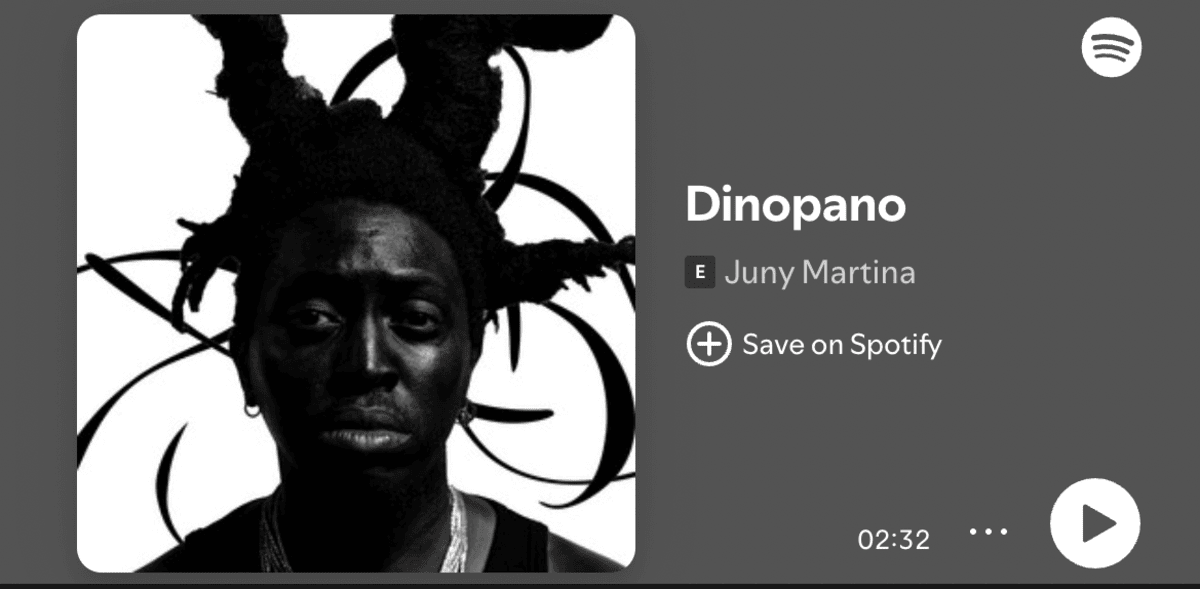
Along with theater, film, we also see references to Bulabanda in music such as by Curaçaoan conscious rapper Juny Martina, whose real name is Jerry Gumbs. He is an environmental scientist by training, and a revered musician with a loyal fanbase across the Papiamentu speaking world. His fourth and most recent album Negropont was released in 2024 and contemplates the identity and futurity of Yu di Kòrsou [people of Curaçao] by blending sounds from Séu, Tambú, muzik di zumbi and hip hop. In the album's final song "Dinopano" [a contracted play on "di nos, pa nos" meaning "from us, for us"] Martina invites his listeners to join him in flying away in the tradition of Bulabanda. He opens by asking,

Accompanying the invitation are references to the ritual purging of salt needed to fly, and the hill where Bulabanda is performed. An important theme in Martina's music is collective liberation. Much like how Elis Juliana deeply studied Afro-Curaçaoan culture and communicated local knowledge back to his community through artistic interventions, Juny Martina is becoming a voice of his people reworking ancestral stories into contemporary anthems.
In the same years that Elis Juliana and Pater Brenneker were collecting oral stories in Curaçao in the 1950s and 1960s, Langston Hughes and Arna Bontemps were conducting similar ethnographic research in the USA and published their collected oral stories as The Book of Negro Folklore in 1958.[23] This book compiles a number of African American folktales including "All God's Children Had Wings" which recounts the tale of enslaved Africans flying away. In the written oral story, an older Black man reminds his fellow enslaved people on the plantation of their African power of flight. As he speaks to them in an unknown language, "they all remembered what they had forgotten, and recalled the power which once had been theirs".[24]
This oral story is one of many recorded in the collective memory across the Black Atlantic. The legend of the flying Africans has inspired both Toni Morrison's Nobel Prize winning novel Song of Solomon, as well as more recently Ta-Nehesi Coates's The Water Dancer. The mass suicide of flying Africans at the Igbo Landing in St. Simon's island in particular, holds a significant place in US and Black diasporic collective imagination. Julie Dash's film Daughters of the Dust poetically portrays a family of Gullah islanders living at Igbo Landing, the historical site off the Georgian coast where Igbo people aboard a slave ship refused enslavement. The US-Barbadian author Paule Marshall's novel Praisesong for the Widow is also anchored in a dream about the legend of flying Africans and Igbo Landing. Whether they flew away, walked back across water, or met their death as the stories go, the Igbo people's refusal to relinquish freedom is a persisting symbol of resistance in Black literary and cultural heritage.
The legend of the flying Africans appears across the Americas and contributes to a collective Black radical imagination. Yet it is also important to recognize the emplaced specificities of each account. Each territory and community archives specific knowledge in their stories, and Bulabanda is no different. In the context of Curaçao, the legend of the flying Africans is not only a generalized "bula bai" or flying away, but a ritualized rejection of the shon's subjection, and communal tradition that regularly took place at Seri Seiroma. That this ritual of Bulabanda is recorded in the collective memory of the territory, the cultural imagination, and the digital archives in Curaçao, ensures its survival.
Julianismo
Elis Juliana, affectionately known as Ompi Elis [Uncle Elis], spent much of his life listening to and recording the oral (hi)stories of elders, uncovering stories held within the land, and teaching young children about Afro-Curaçaoan culture through his weekly radio program Mei ora chiki ku Ompi Elis [A short half hour with Uncle Elis].[25] Juliana is deeply respected for his dedication to Curaçao's ancestral and folk cultures. In 1968, Juliana followed a four-month archeology program in The Netherlands, but otherwise he spent his entire life on the islands. Perhaps one of the reasons his work is not as well-known as other (Dutch) Caribbean intellectuals of similar importance, is because he had access to and prioritized local life on the islands over diasporic or metropolitan experiences. As a largely autodidactic archivist, he drew from many of the modalities available to him in Curaçao, among which, anthropology, ethnography, philosophy, literature, music, archeology, and the visual arts. All these modalities converged into the research and archival methodology and artistic aesthetic of julianismo, whose three core elements are: emancipatory consciousness; practical integration; and continuity.[26] This conceptual model offers a locally specific approach to research and artistic work that honors the knowledge in the island territories and communities. Because his central focus was always about and for Yu di Kòrsou, Juliana focused his life's work on developing islanders' local standards by drawing on and respecting the living cultural archive.[27]
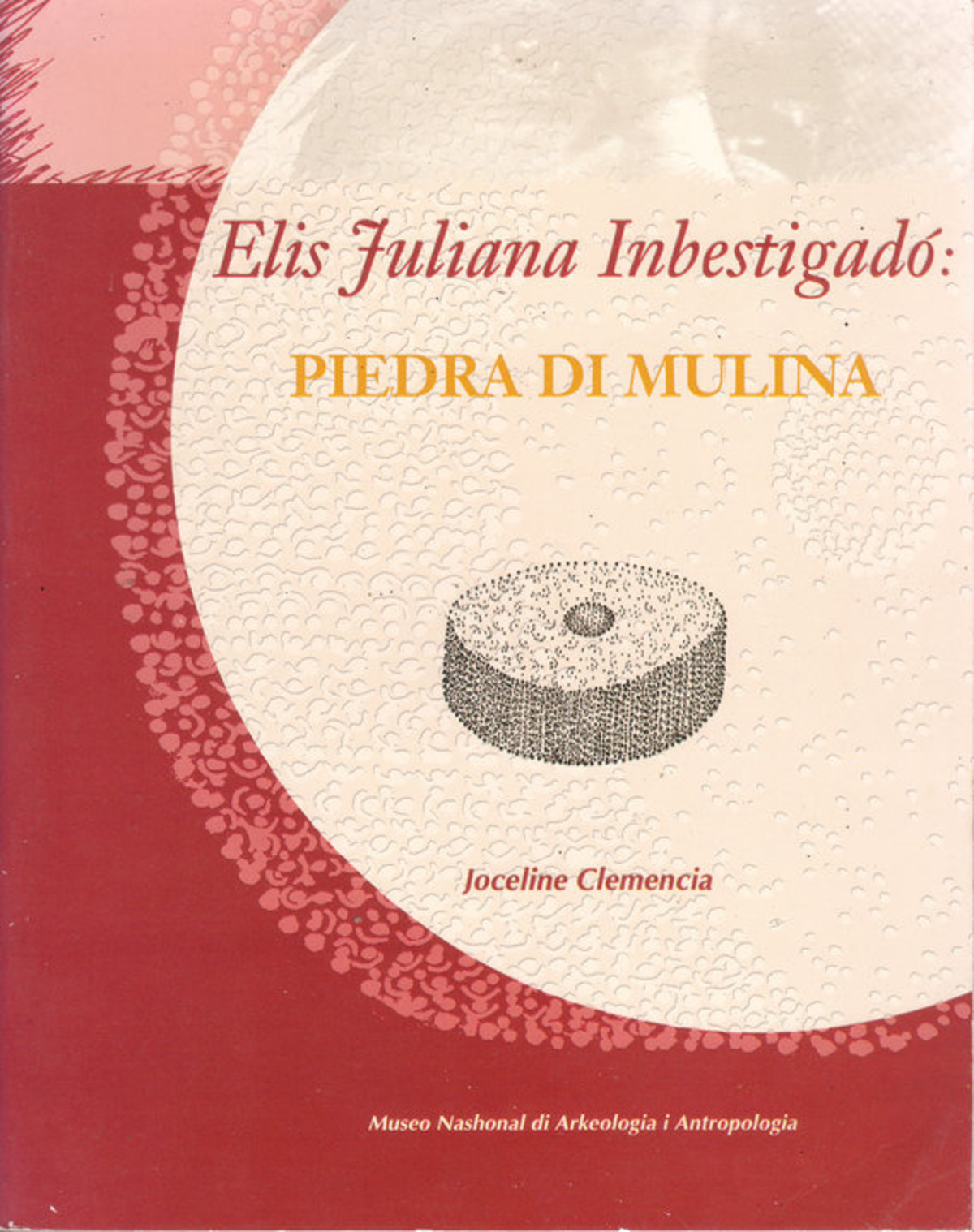
Joceline Clemencia was one of the most insistent scholars of Juliana's archive, locating his work in the national material and immaterial heritage of Curacao from which it was born from and for which it was intended. Clemencia's critical work contributed to the framework of julianismo, as developed in her books Het grote camouflagespel van de OPI: een thematische benadering van de poëzie van Elis Juliana [The great camouflage game of OPI: a thematic approach to the poetry of Elis Juliana] and Piedra di mulina: Elis Juliana inbestigadó [Mill Stone: Elis Juliana as Researcher].[28] In the former, Clemencia investigates the overarching symbol of camouflage organizing Juliana's poetic oeuvre. In the second book she argues that Juliana's methodology does not fit neatly into European theories and hyper-specialized social science methods, which tend to fragment the totality of a human being. Curaçaoan scholar and healer Richenel Ansano explains that while Juliana "documents among other things the double consciousness created by slavery and colonialism and criticizes the deformed personalities and relationships born under these conditions"’ in ways similar to other Afrodiasporic intellectuals, such as Frantz Fanon and W.E.B. Du Bois, "he is more interested in exploring how land defines identity, than in creating decolonial theory."[29] Juliana was less focused on militancy and theorization and more on empowering local culture. He rigorously recovered ancestral (hi)stories and practices in order to build and continuously develop a practical, emancipatory consciousness for Yu di Kòrsou islanders.
Elis Juliana did not treat the knowledge keepers he engaged with as informants, but rather spent decades building relationships of trust amongst elders, leaving no doubt that his loyalties lay with the Curaçaoan people, rather than in extractive ethnographic pursuits. He did not go searching for anthropological insights but spent time learning the stories shaping his community.[30] His research priority was first and always to understand his community intimately.
Many of the 3000 plus objects and documents Juliana archived, such as household objects, religious artifacts, musical instruments, and intangible elements of Curaçaoan heritage recorded in songs and oral stories, honored the popular knowledge of Afro-Curaçaoan life. Although critical, he made sure that his art and research recognized and was recognizable by Afro-Curaçaoan islanders. In order to return local heritage and self-confidence to the people, he used tools of popular culture, and with the same long-term consistency that colonial projects had first used to erode Afro-Curaçaoan heritage. Juliana saw his role as returning knowledge already present in Curaçaoan culture to islanders in ways that acknowledged and uplifted their creators. Thus, his research practice meant both spending time with elders and, at times, consulting archives to verify dates and other data from their stories, although without ever attributing any interpretative authority over the folk knowledge he uncovered.[31]
Integral to how Juliana conducted his research was how he developed and communicated with his community. He understood the reciprocal relationship between scientific research and the arts in accessing knowledge and making it accessible. Juliana used new media technologies at the time such as the tape and video recorders to facilitate his research. He also made use of the various multimedia outlets available, publicizing his findings through broadcast radio and television programming, along with more traditional written, visual, and theatrical modes. In 1957, Juliana hosted the radio program Palabra, Pensamentu, Poesia [Word, Thought, Poetry] on the station Curom. Then in 1967, at the same station he hosted Sòpitu kultural [Cultural Soup]. Later he hosted Ban bèk [Let's Go Back], and the children's programs Mei ora chikí ku Ompi Elis [A Short Half Hour with Uncle Elis] at the station Z86. In 1960 he hosted the government sponsored television program Nos Tera [Our Land].[32] Juliana understood that storytelling and mass media are not just entertainment but diffusion of knowledge.
Along with the multimedia outlets he used to disseminate his work, the way Juliana conveyed his messages indicates his priority in making local knowledge locally accessible. Juliana often used a dialogic style which evoked Curaçao's rich oral storytelling tradition in written form. He was a ventriloquist of local voices and, as such, his poetry continues to feel deeply recognizable to islander readers. Poems such as "Pan Franses" [French Bread] and "Konseho" [Advice] from his poetry collection OPI: Organisashon, Planifikashon, Independensia [OPI: Organization, Planning, Independence] are structured as conversations.[33] Juliana also typically writes in first person, thus locating the reader inside the world of the poem or novella and often infusing his works with a sense of responsibility.
Juliana understood the geopolitics of knowledge, and knew that standards are culture-bound, so he went about creating locally specific critical frameworks to engage with knowledge archiving and artistic expression. For example, Juliana learned to read between the lines while investigating oral knowledge, acknowledging that euphemism and indirect speech was a common way of speaking among Curaçao's elders. He cushioned his sharp rhetoric in riddles and word play, a resistance strategy similarly found in tambú lyrics. This way of writing or saying something indirectly, or with multiple meanings, appears in many Afro-diasporic traditions. In his book The Signifying Monkey, Henry Louis Gates Jr. argues that double-voiced Signifying is an artistic expression and survival practice with origins in enslavement and post-abolition in the Black Atlantic. He refers to Frederick Douglass's experience of US Northerners mistakenly interpreting slave songs as evidence of contentment, explaining that "this great mistake of interpretation occurred because the blacks were using antiphonal structures to reverse their apparent meaning, as a mode of encoding for self-preservation."[34] The call and response structures along with the euphemistic language that Gates mentions, and that Juliana often encountered with elders and used in his dialogic poetry, could encode multiple meanings. The self-preservation practice of encoding songs with multiple meanings can also be seen widely in the recordings of the Zikinzá collection, such as in the song previously referenced "Baulo ta den tera." Whether code-switching between Papiamentu and Guene, or indirect, metaphorical speech this linguistic maneuvering was important in order for enslaved and recently freed Black people to express themselves authentically while protecting themselves and their truths from repression. Now it remains as an inherited embodied linguistic legacy.
Territorial Archive in Aventura di un kriki
Elis Juliana is often remembered for his extensive poetry and short stories along with his archival work. Yet he himself believed that his youth novella Aventura di un kriki [Adventures of a Cricket] "more than any of his others, depicted the nuances of Caribbean life."[35] The novella has all the hallmarks of camouflaged resistance and humorous critique that make Juliana's work so distinctly recognizable. Juliana wrote Aventura di un kriki in 1989, narrating the adventures of a cricket named Kriki conducting research on the insect world for a book he is writing. In the novella, Juliana's own practice of territorial archiving through a blend of research and storytelling is mirrored in Kriki's actions. The land is constructed as an archive of knowledge, and Kriki unearths and disseminates this archive in a camouflaged style typical of Juliana, and fundamental to Papiamentu understandings of the world.
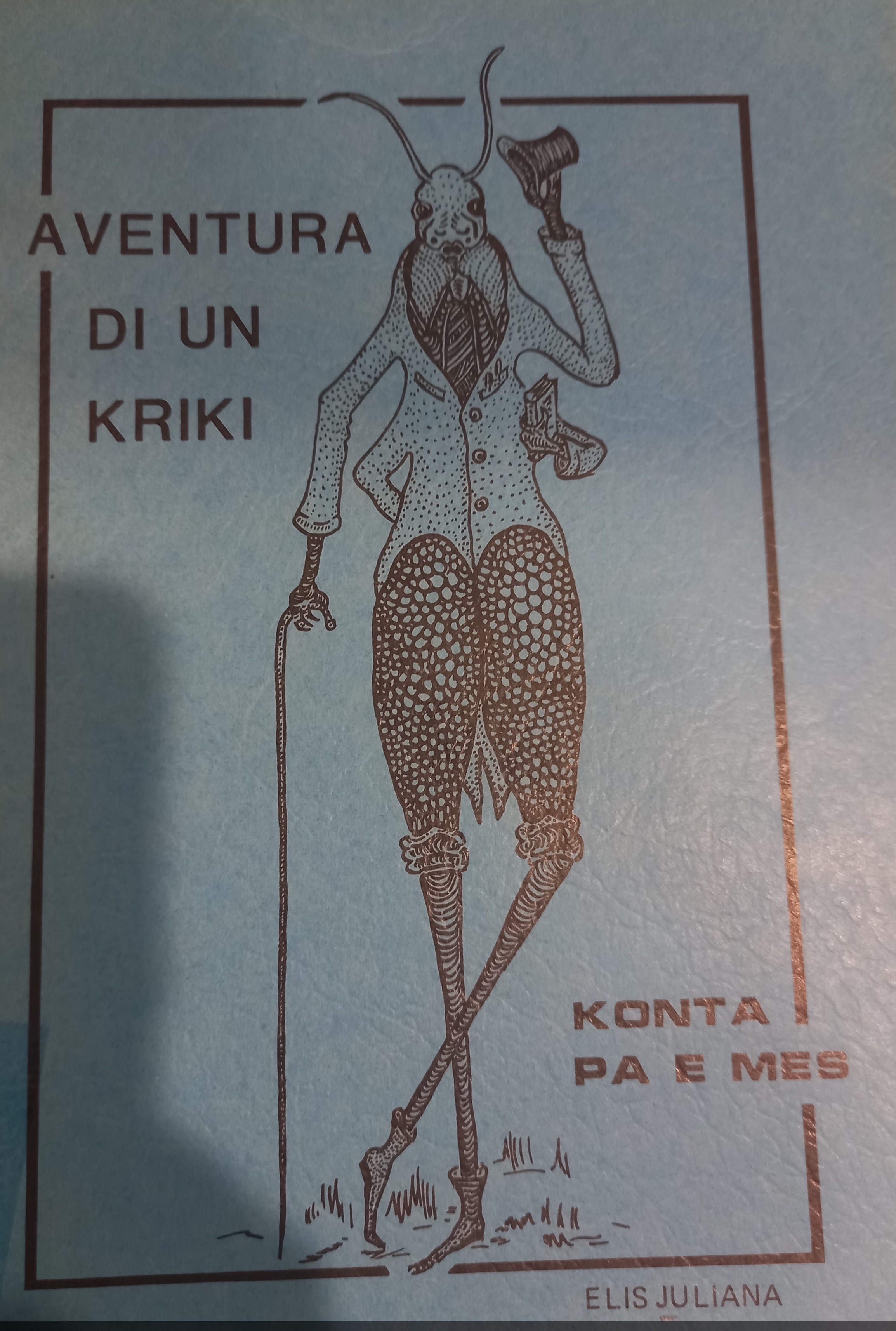
In the novella, Kriki walks around interviewing insects as research for the book he is writing. He narrates, "Pues, un tramèrdia meskos ku tur dia, despues di a lesa hopi buki mashá interesante, m'a sali dal un keiru. Pa mi keda práktiko - loke semper mi ta i semper lo mi keda miéntras mi ta un kriki–-m'a disidí di utilisá mi paseo pa hasi un bon estudio."[36] [One afternoon, just like every other day, after reading some very interesting books, I went for a walk. Being the practical type - something I always am and will always be for as long as I am a cricket - I decided to use my walk as part of my research].[37] Kriki acknowledges the value of books, as well as the practical knowledge held in the land, choosing to study both. This methodology of walking the land and listening to the oral stories from beings he encounters, mirrors Juliana's own practice of emplaced rhizomatic investigation. Walking as a research practice assumes the territory as a source of knowledge. And just as one must learn to read words to understand the stories in books, one must learn to see the relations of a place in order to read the stories archived in the territory.
Understanding the land as an archive of history is common throughout the Caribbean region. So much so that Caribbean literature is sometimes "characterized by the imagination of landscape as a reservoir of repressed or erased histories. The natural landscape, plants, trees, but also other material objects, testify to a reality (past or present) that was erased from dominant discourses."[38] It is unsurprising that Juliana, as an archeologist, ethno-musicologist, oral story archivist and storyteller, works across disciplines to unearth the stories held in Curaçao's soil, while he is engaged with the material history literally buried in the territory, Juliana is equally interested in the folk stories elders recount about emplaced life on this particular island he calls home. These different types of locally grounded knowledge fill in each other's silences and begin to tell the tale of Curaçao. Yet research alone can never approach a full truth in the Caribbean, a region so shaped by erasure. Even if it were possible to dig through all the archives recorded in the libraries, the land, and the body, there are stories that would still require what Saidiya Hartman calls critical fabulation, wherein the researcher must "imagine[s] what cannot be verified," to generate what is ultimately "a history written with and against the archive."[39] Aventura di un kriki engages many of the similar aims of critical fabulation. At the same time, of course, critical fabulation is a particular writing methodology and aesthetic born from a specific Trans-Atlantic erasure, and Aventura di un kriki is not a historical work. On a literal level, Aventura di un kriki narrates the insect world that requires imagination with and against the human archive of knowledge and the land. On a metaphorical level, it foregrounds the undocumented epistemologies and plights of working-class Afro-Curaçaoans. Some may find that Aventura di un kriki is more a work of allegorical fiction than critical fabulation, yet these are not mutually exclusive concepts. The social commentary camouflaged in the metaphorical novella is written both with and against a local Papiamentu ecological archive.
Then there is archived knowledge that not everyone is entitled to know, depending on the respect and relations one has with that source. For example, there are mystical elements and folk practices marked in the land and embedded in the novella that remain unexplained, such as local death rituals. Many of these rituals, such as of ocho dia, are recorded in the Zikinzá collection. Where Pater Brenneker offered explanations in his book series Sambumbu, Juliana communicated this local collective knowledge back to his people through creative work such as in Aventura di un kriki. Juliana's refusal to explicitly illuminate the rituals gives both a communal platform for folklore to be celebrated yet ensures that only those already familiar with these traditions will recognize them as such. The lack of explanation is a notable omission in the novella given that the protagonist Kriki explains in detail many (local) biological and artistic phenomena. This preference for under-explaining and camouflage is characteristic of julianismo, and signals Juliana's target audience as Afro-Curaçaoans who would already understand the rituals described. Juliana respects his community's right to opacity, a concept articulated by Édoaurd Glissant, as the right to not be knowable.[40] In an interview with a local newspaper, Juliana explained that the soil is like a book for archeologists, and taking objects out of the dirt without care is like yanking a page out of a book.[41] He treated the earth and those who called her home with respect; the intention was not to dig up everything, because he found it important to study objects in their original state and to understand their meaning in daily life. Juliana saw the role of archeologist as one of reading the territory yet also respecting that it is not just which knowledge is accessed, but how it is related to and contextualized that matters.
Conclusion
Just as Juliana spent a lifetime listening to and archiving the stories of the land and of the elders in Curaçao using the tools at his disposal, so too are we following generations charged with this archeological task of digging through and creating with and against the territorial, embodied, and digital archives of Curaçaoan knowledge. Juliana's archival and creative legacy is being preserved through the digitizing of the Zikinzá collection, digitizing of local library catalogues housing his works, digitizing of the Sambumbu books that help explain Afro-Curaçaoan cultural heritage, and the creation of the Elis Juliana digital archive. Beyond mere posterity, these digital afterlives are vibrant sources inspiring cutting edge research and artistic works from the Dutch Caribbean. From academic research into linguistics, history, and folklore to research informed works of film, music, theater, and literature, Juliana's archival sources and methodology are foundational to Dutch Caribbean cultural heritage and provide a rich web of shared connections across the Black Atlantic and the Caribbean digital landscape.
This look into Juliana's multimodal archivism offers points of entry into the methodology of julianismo which offers a specific Curaçaoan approach to doing archival research. Juliana's archival work did not end with the Zikinzá collection. And the Zikinzá collection is still evolving after Juliana's passing away. It is now on future generations of Yu di Kòrsou to engage and grow this body of knowledge with the technologies and imaginaries we have available.
Joceline Clemencia, Elis Juliana inbestigadó: piedra di mulina (Willemstad, Curaçao: Museo Nashonal di Arkeologia i Antropologia, 2004), 9. ↩︎
While recognizing the variations of Papiamento/u from Aruba, Curaçao and Bonaire respectively, my previous research was exclusively on authors from Curaçao thus I make explicit reference to Papiamentu ↩︎
ABCSSS refers to the Dutch Caribbean islands of Aruba, Bonaire, Curaçao, St. Maarten, St. Eustatius, and Saba ↩︎
A notable exception is Hélène Garrett in Canada who translated Adventures of a Cricket and Haiku in Papiamentu/ Un mushi di haiku ↩︎
Margo Groenewoud, “Decolonization, Otherness, and the Neglect of the Dutch Caribbean in Caribbean Studies,” Small Axe: A Caribbean Journal of Criticism 25, no. 1 (2021): 103, https://doi.org/10.1215/07990537-8912808. ↩︎
Jay B. Haviser and Elis Juliana, “Communicating and Interpreting African Aesthetics in the Caribbean,” Proceedings of the XIX International Congress for Caribbean Archaeology, 2001, 314, Digital Library of the Caribbean. ↩︎
Thank you to all the librarians at Mongui Maduro Library, and in particular Lianne Leonora ↩︎
Alex Gil, “Global Perspectives: Interview with Alex Gil,” by Ernesto Priego, 4Humanities, last modified January 11, 2013, accessed March 29, 2024, https://4humanities.org/2013/01/interview-with-alex-gil/. ↩︎
Clemencia, Elis Juliana, 6. ↩︎
Rose Mary Allen, Di ki manera? A Social History of Afro-Curaçaoans, 1863-1917 (Amsterdam: SWP Publishers, 2007). ↩︎
Allen, Di Ki Manera?, 27. ↩︎
Allen, Di Ki Manera?, 53. ↩︎
Vernon Chatlein explained that in the Zikinzá collection, when recordings are in language(s) other than Papiamentu, they are sometimes incorrectly understood to be Guene, when there may be multiple linguistic influences in the archive including Haitian Kreyòl ↩︎
Frank Martinus Arion, The Kiss of a Slave: Papiamentu’s West-African Connections (Amsterdam: Centrale Drukkerij Universiteit van Amsterdam, 1996). ↩︎
Arion, The Kiss, v. ↩︎
Arion, The Kiss, 222. ↩︎
Arion, The Kiss, 222-223. ↩︎
Arion, The Kiss, 193; Allen, Di Ki Manera?, 54. ↩︎
“Imershon Curaçao - Aftermovie (July 2021),” video, 05:55, YouTube, posted by Vernon Chatlein, September 8, 2021, https://www.youtube.com/watch?v=HJWi47NBoKQ&t=33s. ↩︎
Marti Doran, “Genénan a bula bai,” interview by Paul Brenneker, Zikinzá Collection, 1974, http://uoc.sobeklibrary.com/AA00003698/00001. ↩︎
Richenel Ansano, “Bulabanda: a trait of Congolese heritage in our culture,” Kared’e biná (blog), September 8, 2012. ↩︎
All translations are my own unless otherwise noted. ↩︎
I found The Book of Negro Folklore through the Internet Archive, a freely accessible digital library, and one of the world’s largest book digitization projects. They also host a significant collection of Antilliana and the Dutch Caribbean material. ↩︎
Langston Hughes and Arna Bontemps, “All God’s Chillen Had Wings,” in The Book of Negro Folklore (New York, USA: Dodd, Mead, 1958), [Page 64], pdf. ↩︎
All translations are my own unless otherwise noted. ↩︎
NAAM Curaçao, “Julianismo,” Elis Juliana. ↩︎
Yu di Kòrsou often refers to Afro-Curaçaoans but can also be a context-specific identity marker generally indicating belonging to Curaçao. For further reference see Rose Mary Allen and Francio Guadeloupe, “Yu Di Kòrsou, A Matter of Negotiation: An Anthropological Exploration of the Identity Work of Afro-Curaçaons,” in The Culturalization of Citizenship (Palgrave Macmillan UK, 2016), https://doi.org/10.1057/978-1-137-53410-1. ↩︎
Joceline Clemencia, Het grote camouflagespel van de OPI: een thematische benadering van de poëzie van Elis Juliana (Leiden: Caraïbische Afd., Koninklijk Instituut voor Taal-, Land- en Volkenkunde, 1989).; Clemencia, Elis Juliana ↩︎
Richenel Ansano, “Beyond Gentle Giants and Suffering Citizens: Crafting the Courage to Write a New Nation by Writing the Land” (lecture, 14th International Conference on Caribbean Literature, Willemstad, Curaçao, November 6, 2014). ↩︎
Clemencia, Elis Juliana, 30. ↩︎
Clemencia, Elis Juliana, 42. ↩︎
NAAM Curaçao, “Formanan” [Forms], Elis Juliana, last modified 2012, https://elisjuliana.org/formanan.html. ↩︎
Elis Juliana, OPI: Organisashon, Planifikashon, Independensia (Kòrsou: Fundashon pa Planifikashon di Idioma, 2013). ↩︎
Henry Louis Gates, The Signifying Monkey: A Theory of Afro-American Literary Criticism (New York: Oxford UP, 1989), 73. ↩︎
Elis Juliana, The Adventures of a Cricket, trans. Hélène Garrett (Saarbrücken: LAP LAMBERT Academic Publishing, 2016), backcover. ↩︎
Juliana, Aventura di un kriki, 4. ↩︎
Elis Juliana, The Adventures of a Cricket, trans. Hélène Garrett (Saarbrücken: LAP Lambert Academic Publishing, 2016), 6. ↩︎
Elizabeth M. DeLoughrey, Renée K. Gosson, and George B. Handley, Caribbean Literature and the Environment: Between Nature and Culture (Charlottesville: University of Virginia Press, 2005), 1. ↩︎
Saidiya Hartman, “Venus in Two Acts,” Small Axe: A Caribbean Journal of Criticism 12, no. 2 (2008): 12, https://doi.org/10.1215/-12-2-1. ↩︎
Édouard Glissant, Poetics of Relation, trans. Betsy Wing (Ann Arbor: University of Michigan Press, 1997), 190. ↩︎
Clemencia, Elis Juliana, 59. ↩︎
Authors' Bios
Mikayla Vieira Ribeiro
Mikayla Vieira Ribeiro is a writer, teacher, and translator born and raised in Curaçao. She has a Bachelor’s degree in Black Studies and English from Amherst College (USA), and a Research Masters in Literature from the University of Amsterdam (NL) where she focused on ecological relations in Papiamentu literature. Her work explores healing relations with the land and sea in the Dutch Caribbean, and broadly across Latin America. Drawing from the territories and communities that have shaped her, Vieira Ribeiro is a bridge across Papiamentu, Portuguese, Spanish, English, and Dutch geolinguistic imaginaries. Her work engages digital and oral archives, community based artistic-research, and poetic translations. She currently lives in Amsterdam, and works as a teacher-librarian specialized in digital literacy and research skills.